
Trusted by:
University of Southern California
Warner Bros.
Volvo
Amazon
Stanford University
Updated: June 11, 2026
9 min read
Confused about the difference between badge and certificate? Learn how digital badges and certificates differ, what each proves and when to use one or both effectively.
Research with AI:
The difference between badge and certificate often feels blurred. At first glance, they seem to do the same job: both recognize learning and live online. But in reality, they answer different needs for learners, employers and training teams.
Our guide breaks it down—it shows when to use each and how to combine them into one clear credential strategy. You will also find out how Certifier can support a modern credential strategy without adding complexity.
TL;DR
The difference between digital badge and certificate comes down to scope, format and use case.
Digital badges highlight specific skills and milestones while certificates confirm a full course completion.
Using both together creates clearer learning paths and stronger recognition outcomes.
Platforms like Certifier help manage digital certificates and badges in one verified workflow.

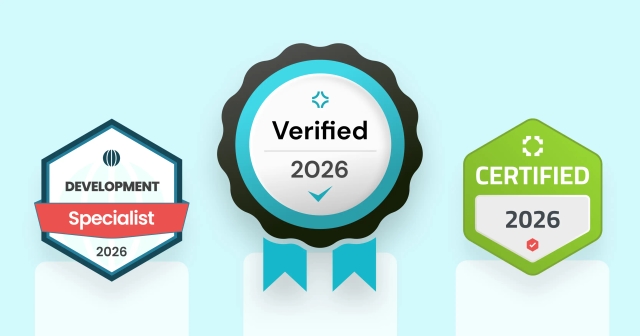
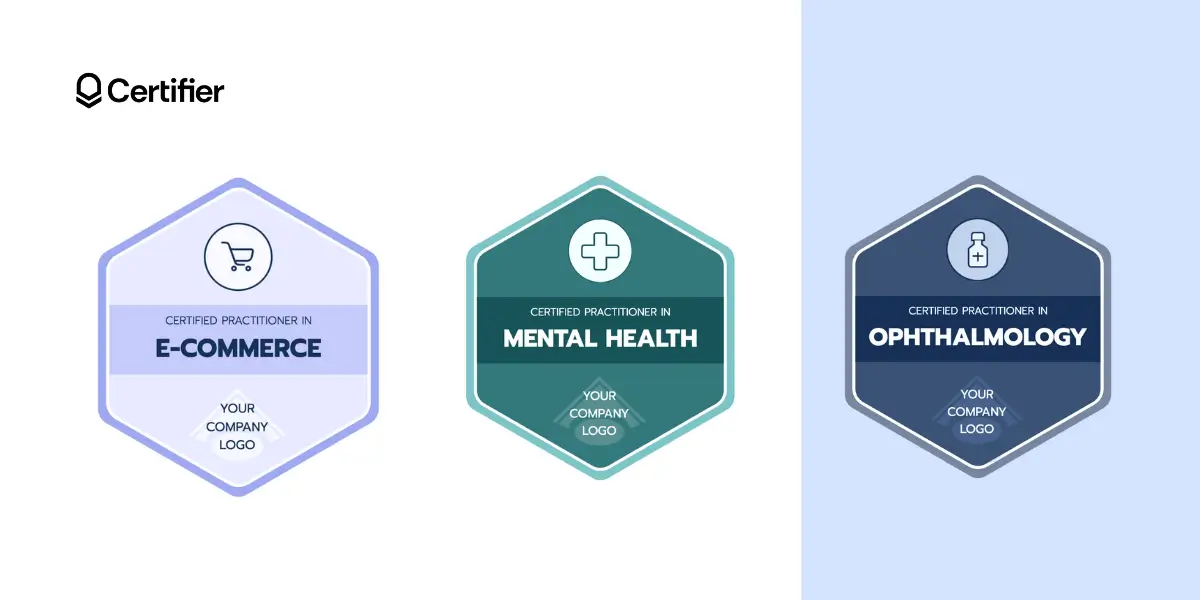
A digital badge is a visual credential that represents a specific skill or achievement. It works best when learning is modular—one badge can represent completing modules inside a larger learning path or proving one concrete capability.
Each badge includes rich metadata behind the visual layer that helps verify skills and link them to real outcomes. They are also easy to store, as they are usually kept in credential digital wallets and stay accessible across platforms.
And this is exactly how it works in practice in platforms like Certifier. Badges follow open badges 3.0 standards and come issued as secure credentials with built-in verification features.
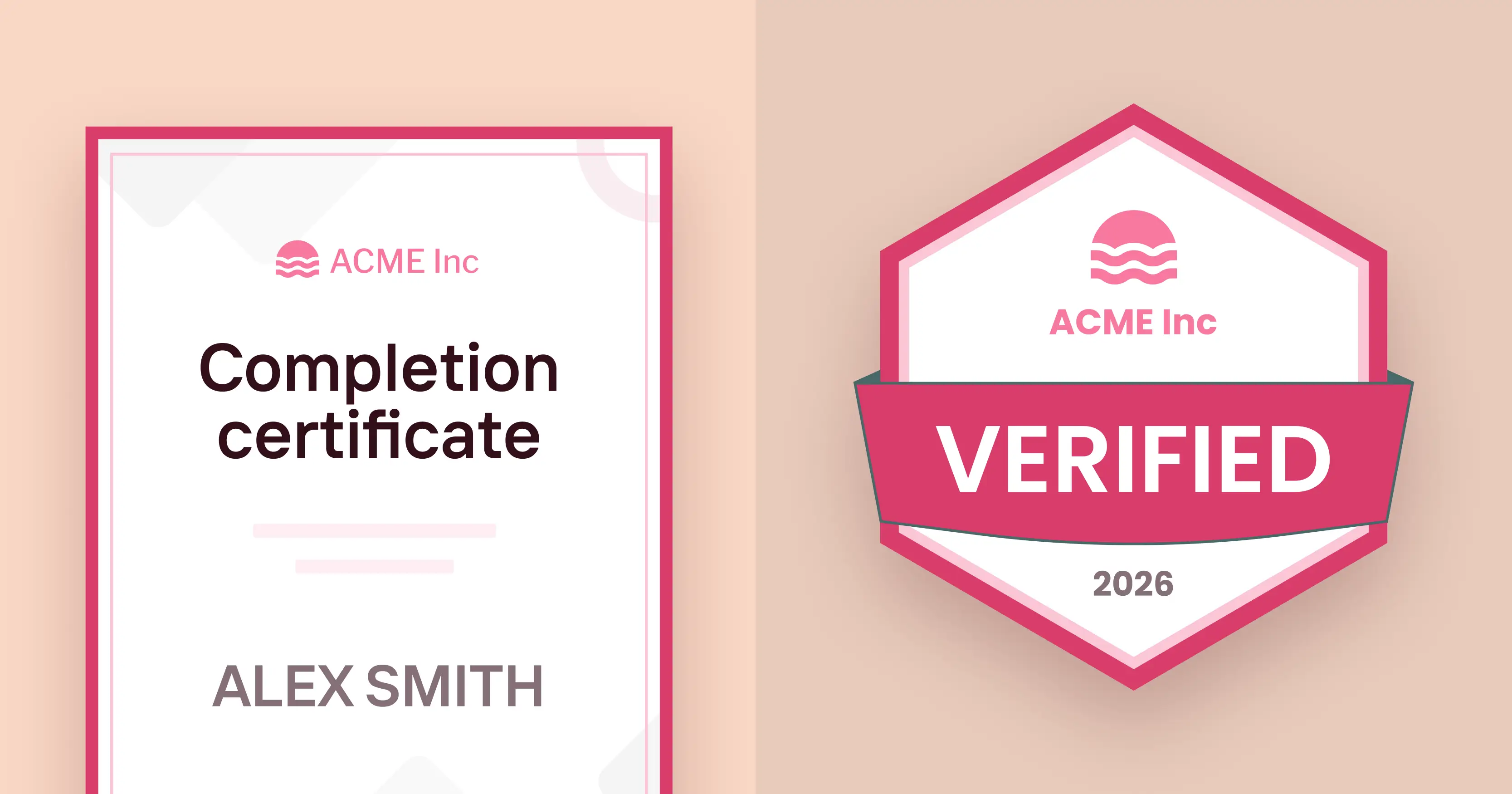
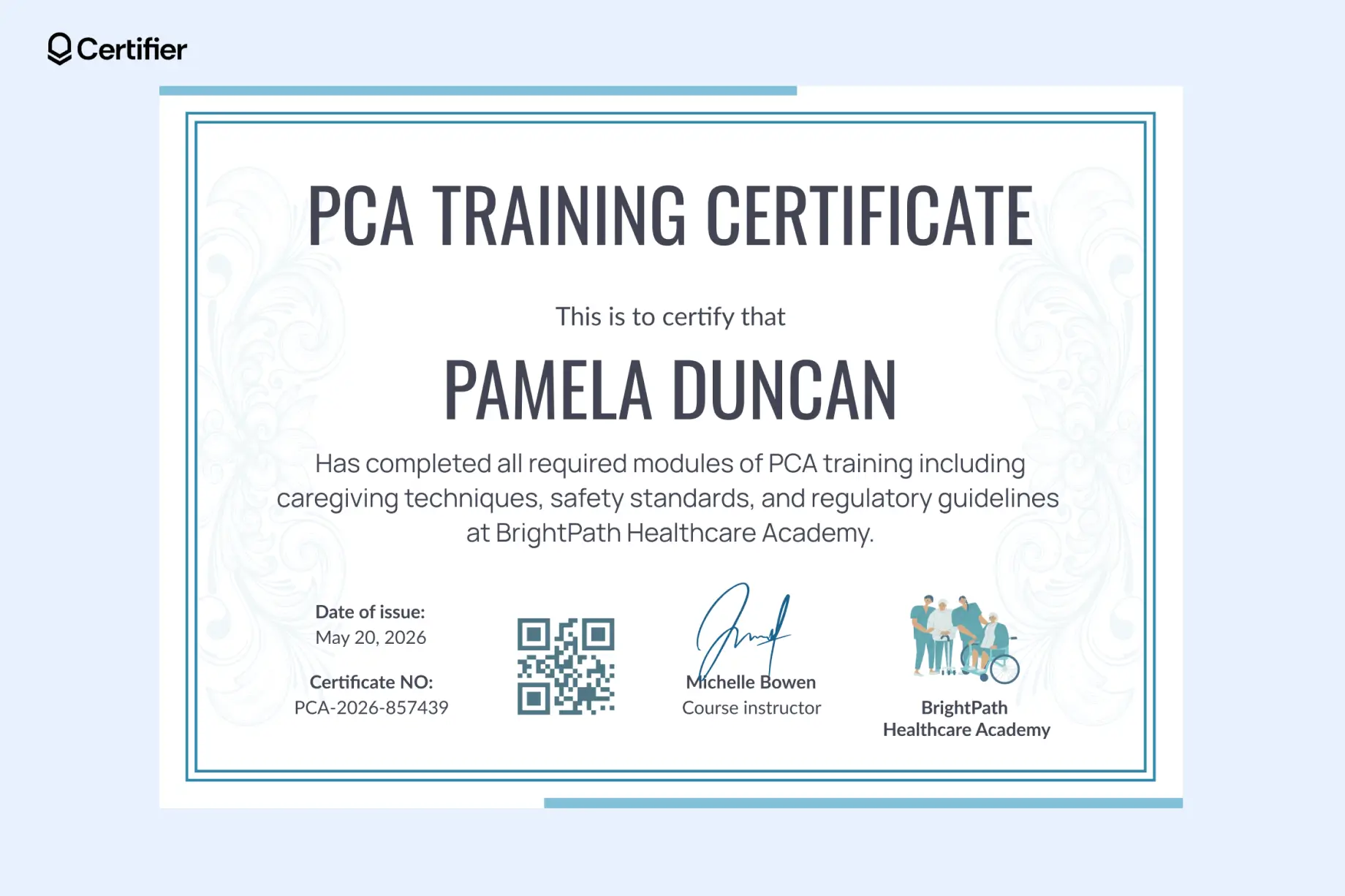
A certificate is a formal credential awarded after completing a full course or program. It confirms completion and signals a higher level of commitment. It usually follows a document-style format, with a recipient name, course title, issue date and issuer details. Many also include a certificate validation QR code.
Digital certificates are widely used by educational institutions, universities and professional training providers.
Here again, online tools like Certifier turn static PDF certificates into verifiable digital documents that are easy to manage and share.
So… is badge and certificate same? No.
The real difference between badge and certificate shows up when credentials leave the platform and meet the real world. Learners want recognition that fits how they learn and how they work. Employers want signals they can quickly understand and trust.
Digital badges come with many benefits, but so do certificates. They support crucial areas in other ways and understanding these key differences helps you choose the right credential for the right situation.
Recommended to read
Here is the short table with all crucial information.
Area Digital Badge Certificate Purpose Highlights a specific skill, micro-achievement or milestone inside a learning journey Confirms completion of a full course, program or formal training Scope and weight Narrow scope, skill-focused and often one of many in a learning path Broader scope with higher perceived weight for employers and compliance Format Compact visual icon with embedded metadata, designed for online use Document-style credential, often PDF or print-ready, with formal layout Visibility and sharing Built for frequent sharing on LinkedIn, profiles, portfolios and email signatures Usually shared as a document or listed in certifications sections Information and metadata Key details stored in metadata behind the visual layer Information displayed directly on the document face Perception and use cases Supports ongoing learning, engagement and skill portfolios Supports formal recognition, audits and official proof of completion
And now let’s describe the topic more.
Create and Send Digital Credentials
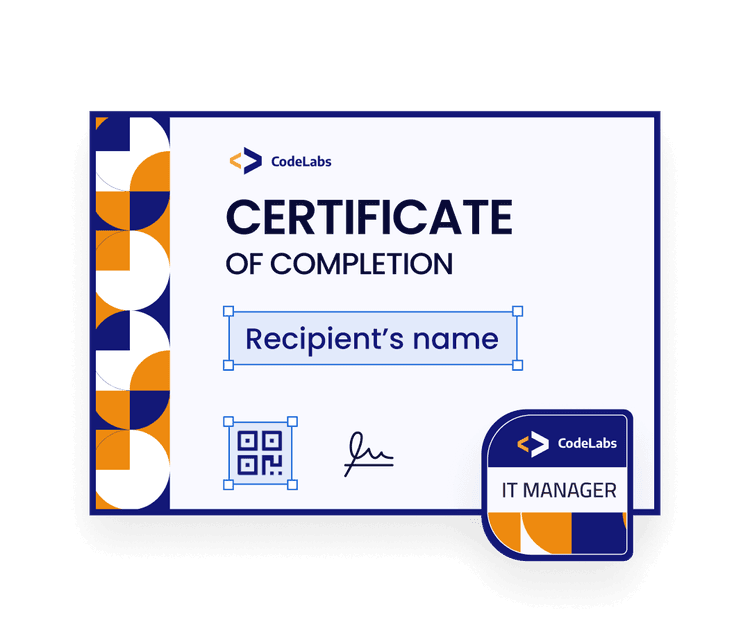
A badge is best for highlighting specific skills and micro-achievements inside a larger learning journey. It works well when learning happens step by step and when progress matters as much as completion.
Also, badges fit naturally into learning paths where learners earn recognition for completing modules milestones or practical tasks, for example “Email Marketing Basics” or “Module 3: SQL Joins.” Each badge marks real progress and keeps learners engaged while they move forward.
Moreover, badge programs become stronger when structured through Pathways. With them, you can guide learners through a clear sequence of credentials and issue badges automatically as each step is completed. Progress stays visible and learners always know what comes next.
A certificate serves a different purpose. It confirms completion of a full course or structured program. Certificates signal that all required components were finished and that defined outcomes were achieved.
They are best used at the end of a journey. For example, you can create a certificate for a webinar, issue one when a student finishes a digital marketing program or has already completed a “Safety Compliance Training.” In these cases, the certificate acts as formal recognition that learners reached the final goal.
A badge has a narrow scope and focuses on one capability or learning unit. Many badges can live inside the same learning path and show progression over time in a way that feels visible and motivating.
Because of that, badges work well for tracking skills growth and supporting ongoing learning without waiting for a final finish line.
A certificate works on a wider level in the digital world. It usually covers an entire course or structured training and brings a stronger sense of closure. That broader scope gives certificates more perceived weight for employers and compliance teams.
Certificates are also fundamental to professional development programs, where formal recognition and clear outcomes matter.
Recommended to read
A badge uses a compact visual representation that is made for the online space. It is easy to spot, easy to share and quick to understand. Behind the visual sits metadata that validates the achievement and explains what the learner actually did.
Thus, badges work well for showing an individual's skills and applied knowledge in a way that feels current. They fit naturally into social profiles, portfolios and resumes where short signals matter.
A certificate follows a more traditional format. It usually looks like a classic award with names, titles, dates and signatures, although it can look in a modern way. This familiar layout helps communicate knowledge gained over a longer course or program.
Certificates balance digital delivery with formal presentation, which makes them comfortable for official use and trusted in professional settings.
A badge is made for frequent sharing and everyday visibility. Learners can add badges to social media profiles, email signatures and personal websites without much effort. This is also where LinkedIn badges really shine.
They let people show skills in real time, while the learning experience is still fresh and they often spark quick engagement from peers and employers.
A certificate moves through different channels. It is usually shared as a document, uploaded during job applications or stored in HR systems for reference. Certificates do not appear in feeds as often, but when proof is needed, they carry stronger formal recognition and feel more official.
If you want a step-by-step walkthrough on how to add certifications to LinkedIn, check out our dedicated article.
A badge keeps most of its details in metadata. That includes who issued it, what criteria were met, the issue date and the validated skills. All of this information lives behind the visual layer and stays easy to access whenever needed. For employers, that means quick checks and confident verification without digging through documents.
A certificate puts the information front and center. The recipient name, program title, issue date and issuer details are visible right away on the document. When someone needs to verify it, they usually scan a QR code or follow a secure link, which makes confirmation straightforward and familiar.
Last but not least, badges support ongoing learning and engagement. It works well for internal training, higher education and skills-focused programs. They help learners build portfolios that reflect real capabilities across job roles.
A certificate suits formal acknowledgment. It is often required for compliance training, academic programs and regulated industries. They are an interesting source for employers to recognize completion and confirm eligibility.
Choosing between badges vs certificates depends on what you want to recognize and how learners will use the credential. Many modern programs use both digital badges and certificates together, to get clarity without overloading learners.
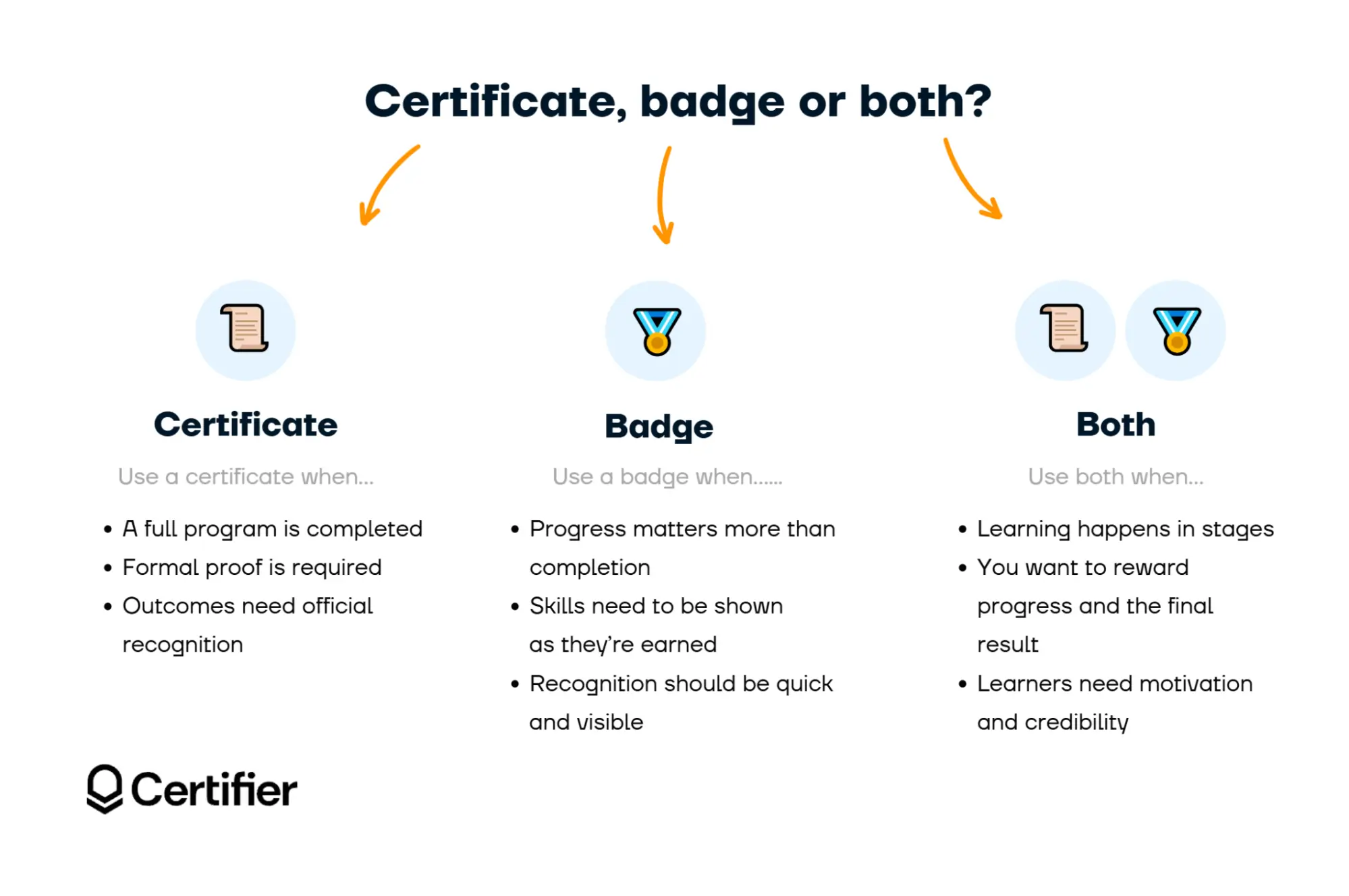
Digital badge vs certificate: when to use each or combine both
Use a badge when you want to recognize progress or mastery of a specific skill. Badges work well when achievements happen frequently and need visibility.
To be more specific, you can take advantage of a badge when you want to:

Recognize microcredentials inside an online course
Support engagement through milestones and progression
Make skills visible on resumes and social profiles
Reward participation in events, communities or workshops
Badges help learners demonstrate skills as they gain them.
On the other hand, you can bet on a certificate when you need formal proof of completion. Certificates fit structured learning with defined outcomes and assessments.
Use a certificate when you want to:
Confirm completion of a full course or training program
Provide documentation for employers or regulators
Recognize high-stakes learning experiences with exams
Replace paper certificates with secure digital versions
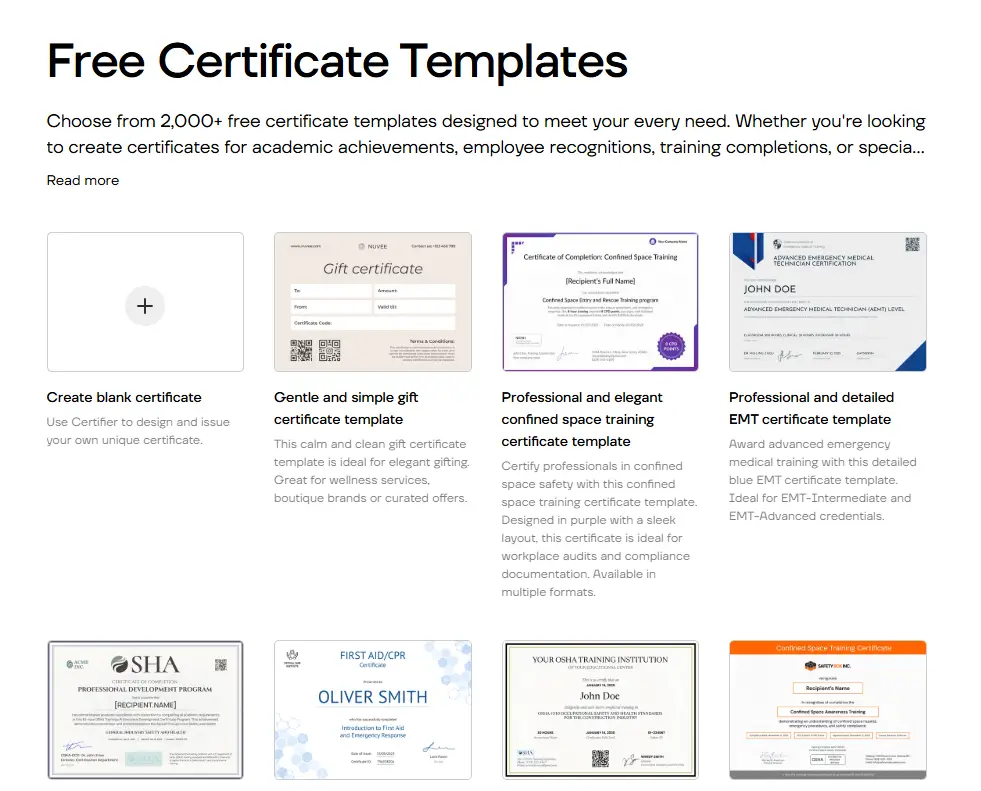
No matter which option you choose, Certifier has a library full of ready-made design templates. That means creating badges or certificates takes far less time than you might expect, even if you are starting from scratch.
You can still combine badges vs certificates when learning happens in stages. Therefore, you can award badges for completing modules or skill units and hand in a certificate after full completion.
The above approach keeps learners motivated while delivering a formal credential at the end. It also helps training teams manage progression and outcomes more effectively.
Certifier supports this structure by issuing both credentials from one system and linking them to completion rules.
Check out digital badges for students and issue them in no time thanks to Certifier’s simple setup and automated credential delivery.

Issuing too many badges with unclear meaning reduces their value. When every small action earns a badge, recognition loses impact. This often happens in e-learning credential programs where badges are not clearly tied to outcomes or skills.
Awarding certificates too early weakens trust. Certificates should confirm real completion, not simple attendance. Handing them out for short sessions or webinars lowers their credibility for employers.
Lack of context or verification creates confusion. Learners should never need to explain what a credential represents or why it matters. This is especially critical for soft skills, where evidence and clarity build credibility.
A balanced approach works best. Badges should be linked to clear skills or milestones and issued only when something meaningful is achieved. Certificates should appear at the end of a course or program to confirm full completion and carry formal weight.
Knowing the difference between badge and certificate matters even more as learning becomes modular and skills-focused. People no longer learn in one long stretch. They build knowledge step by step and expect recognition along the way.
Badges capture progress and visible skills. Certificates mark real completion and outcomes. Used together, they create a credential strategy that actually reflects how learning happens today.
We hope that now you can spot the difference between them and know when to use each. If you want to work with both badges and certificates, use credential platforms that make it possible.
With Certifier you can design, issue and manage digital credentials without friction, while keeping verification and structure in place. Sign up for Certifier and turn badges and certificates into a trusted part of your learning programs.
Below are some of the most common questions people ask about the difference between a badge and a certificate. These quick answers help clear up doubts and make it easier to choose the right credential for your use case.

- B2B SaaS marketing
- Digital Credentials
- Content Strategy
- On-page SEO
- Lead Generation
Chief Marketing Officer
Aksen leads marketing at Certifier, bringing 7+ years of experience with global brands to position digital credentialing as a trusted solution for training providers and educational institutions.