
Trusted by:
University of Southern California
Warner Bros.
Volvo
Amazon
Stanford University
July 03, 2026
11 min read
Still mailing paper certificates or emailing static PDFs your candidates can't verify? Here's how awarding bodies use digital credentials to issue qualifications at scale and give employers an instant way to verify them.
Research with AI:
An awarding body is an organization recognized to design and award qualifications once candidates meet a defined standard. A digital credential is the verifiable, online form of the certificate or badge that proves it.
So how do awarding bodies use digital credentials? They go well beyond swapping paper for a PDF. Credentials get issued at scale once results are confirmed, and learners share verifiable links that employers check on demand.
Awarding bodies use digital credentials to issue qualifications at scale once assessment results are confirmed.
Verifiable credentials let employers and regulators check authenticity without contacting the issuer.
Platforms also handle learner sharing and the rest of the lifecycle, including CPD renewals and revocation.
When scoping a platform, prioritize bulk or API issuance and issuer-controlled verification.

An awarding body is an organization recognized to design and award qualifications. The category covers exam boards and professional bodies. It also includes sector skills councils and CPD accreditors.
Their core asset is trust in the credential, which is exactly what goes digital. For a digital version to hold that trust, it has to stay tamper-evident and verifiable through the issuer, so a qualification can't be altered or faked without detection.
If you want the underlying definitions, see the primer on what digital credentials are.
Across the segment, the same five uses recur. Each one maps to a concrete need and a value the awarding body can point to.
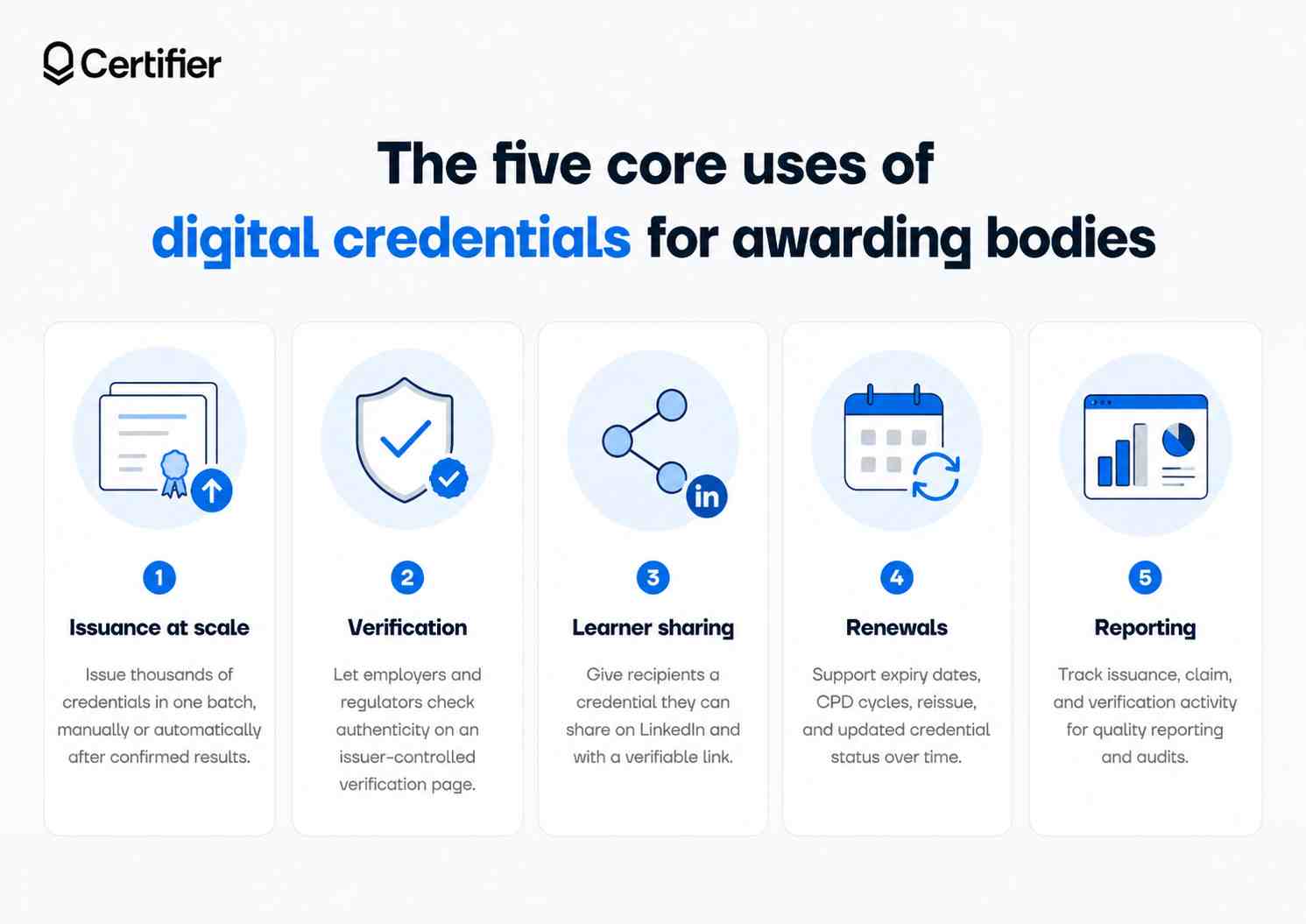
Together, these capabilities support the full credential lifecycle
The first use is volume. An awarding body can issue thousands of credentials in one batch, with issuance triggered automatically when an assessment result or award decision is recorded in its LMS or assessment platform.
This is the digital credentials and assessments connection that matters most to exam boards.
The second use is making verifiable digital credentials that are hard to fake and easy to check. A public, issuer-controlled verification page lets anyone confirm a credential is genuine and current, and tamper-evidence flags anything that's been altered.
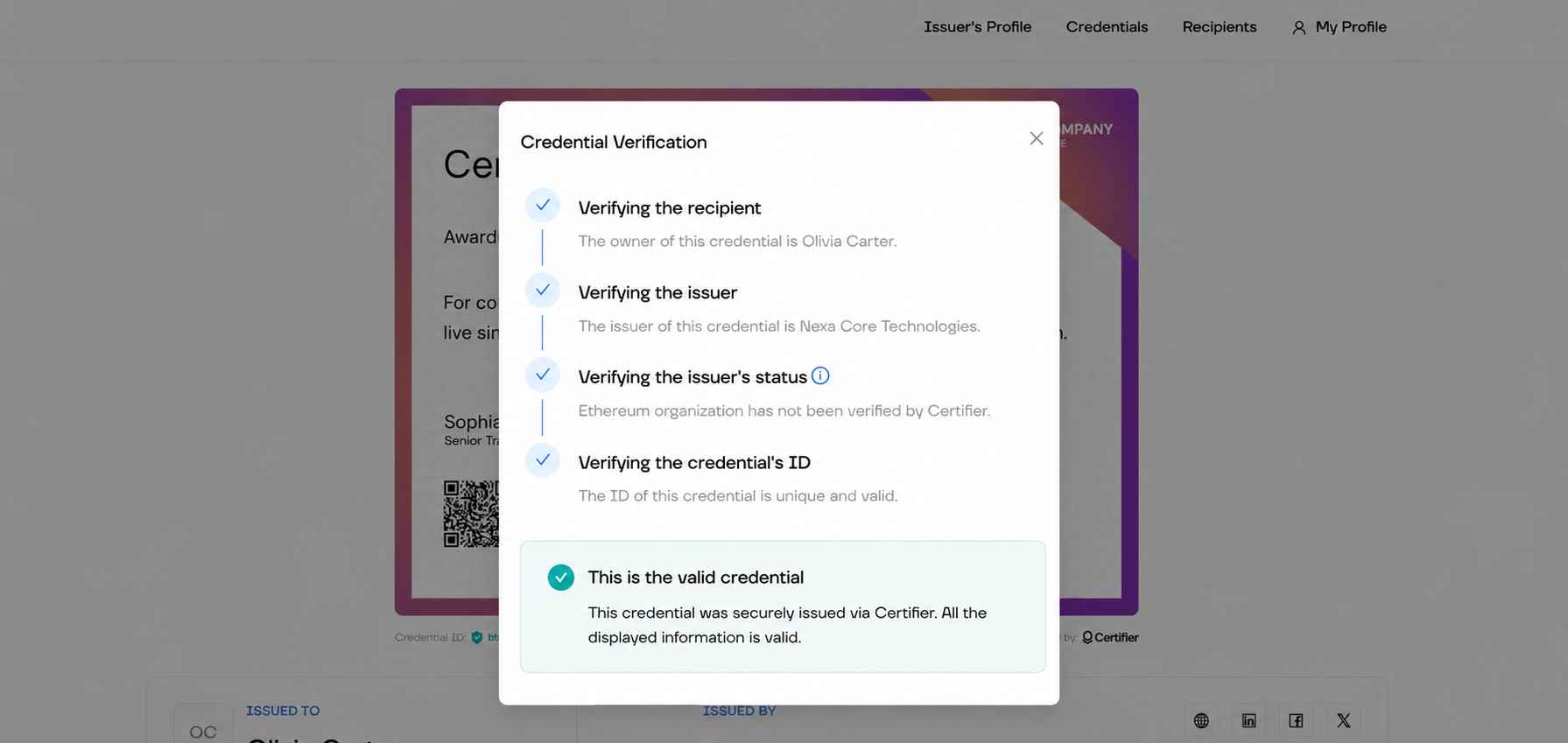
Verification confirms the recipient, issuer, and credential ID before marking the credential as valid
That cuts verification friction and helps catch credentials that have expired or been revoked. It doesn't eliminate fraud on its own, since weak access controls could still allow an authorized user to improperly issue a credential.
The third use is putting the credential in the learner's hands. Recipients get a credential they can add to LinkedIn or other social media channels.
Each one carries a verifiable link an employer can check. For bodies serving students and early-career candidates, digital credentials for students become a portable proof of skill they carry into the job market.
The fourth use is managing credentials over time. Because many qualifications remain valid only for a defined period, certificate expiration and renewal need to form part of the credential lifecycle.
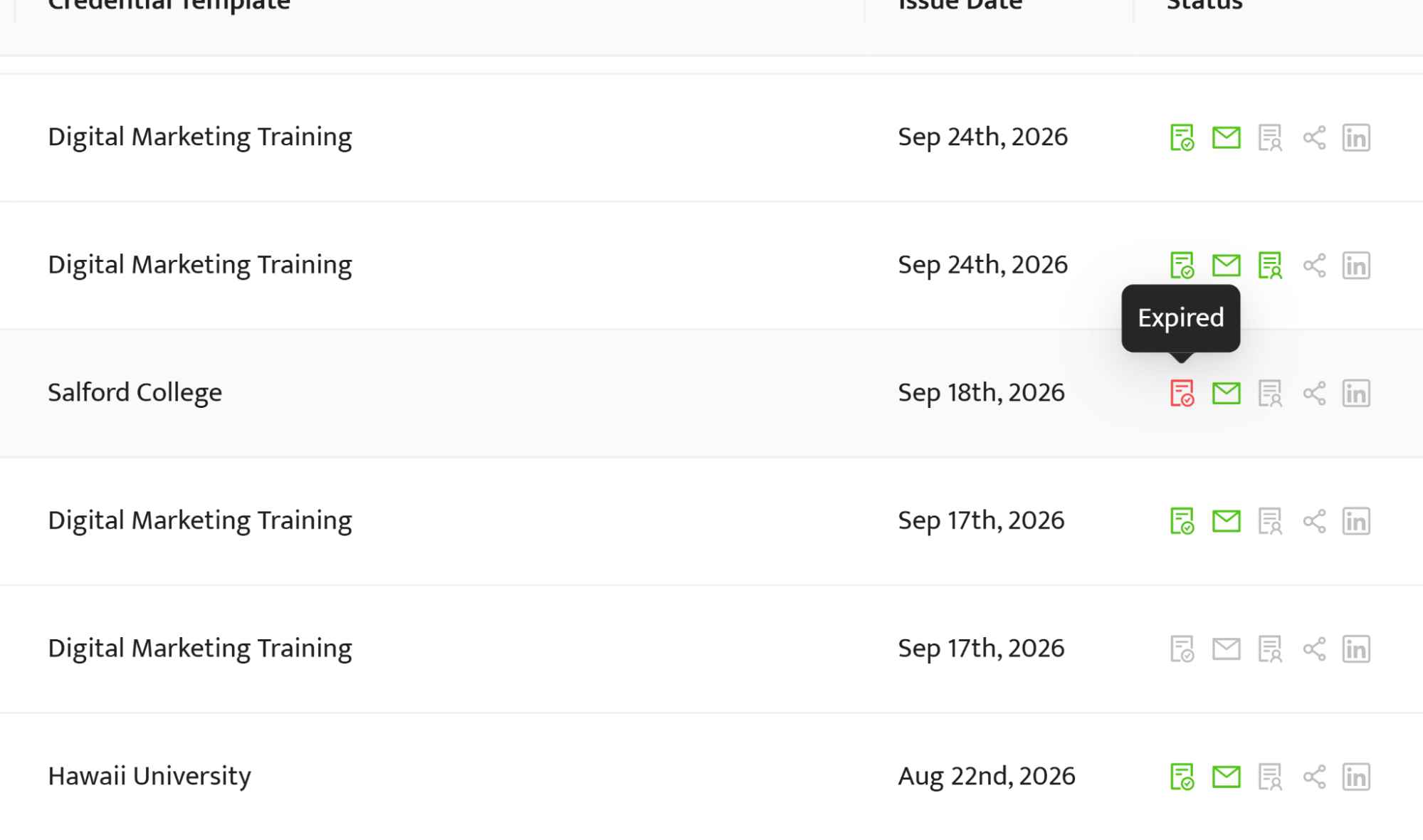
Certifier’s dashboard showing credential status
Once a candidate completes the required CPD, the awarding body can extend or reissue the credential, and the verification page updates to show its current status.
The fifth use is data. Awarding bodies can track issuance and claim rates across a cohort. They can also see how often credentials get verified, which supports quality reporting and regulator audits.
How those uses play out depends on the type of awarding body, and on who needs to verify the credential later, usually employers or regulators.
Awardingbody Type | Credential Issued | Issuance Trigger | Lifecycle Need |
|---|---|---|---|
Regulated qualification body | Qualification certificate | Confirmed assessment result | Verification and audit |
Professional or chartered body | Professional designation | Membership or exam pass | CPD and renewal |
Sector certification body | Safety or skills certificate | Practical assessment | Expiry and re-certification |
Exam or assessment organization | Result-based certificate | Marked assessment | Verification at scale |
End-point assessment organization | Apprenticeship completion | Final EPA decision | Clear achievement record |
CPD or training accreditor | Recurring credential | Course completion | Renewal cycles |
These are real patterns, not hypotheticals. City & Guilds, for instance, issues digital credentials built on Open Badge technology across its qualifications, each with a unique verifiable URL learners can share.
Verifiable digital certificates work in the same way, giving employers and other third parties a direct way to verify that a qualification certificate is genuine and up to date.
For an awarding body, issuing a digital credential is not a single action. It is a lifecycle that starts with the credential’s design and continues through issuance, verification, renewal, and reporting.
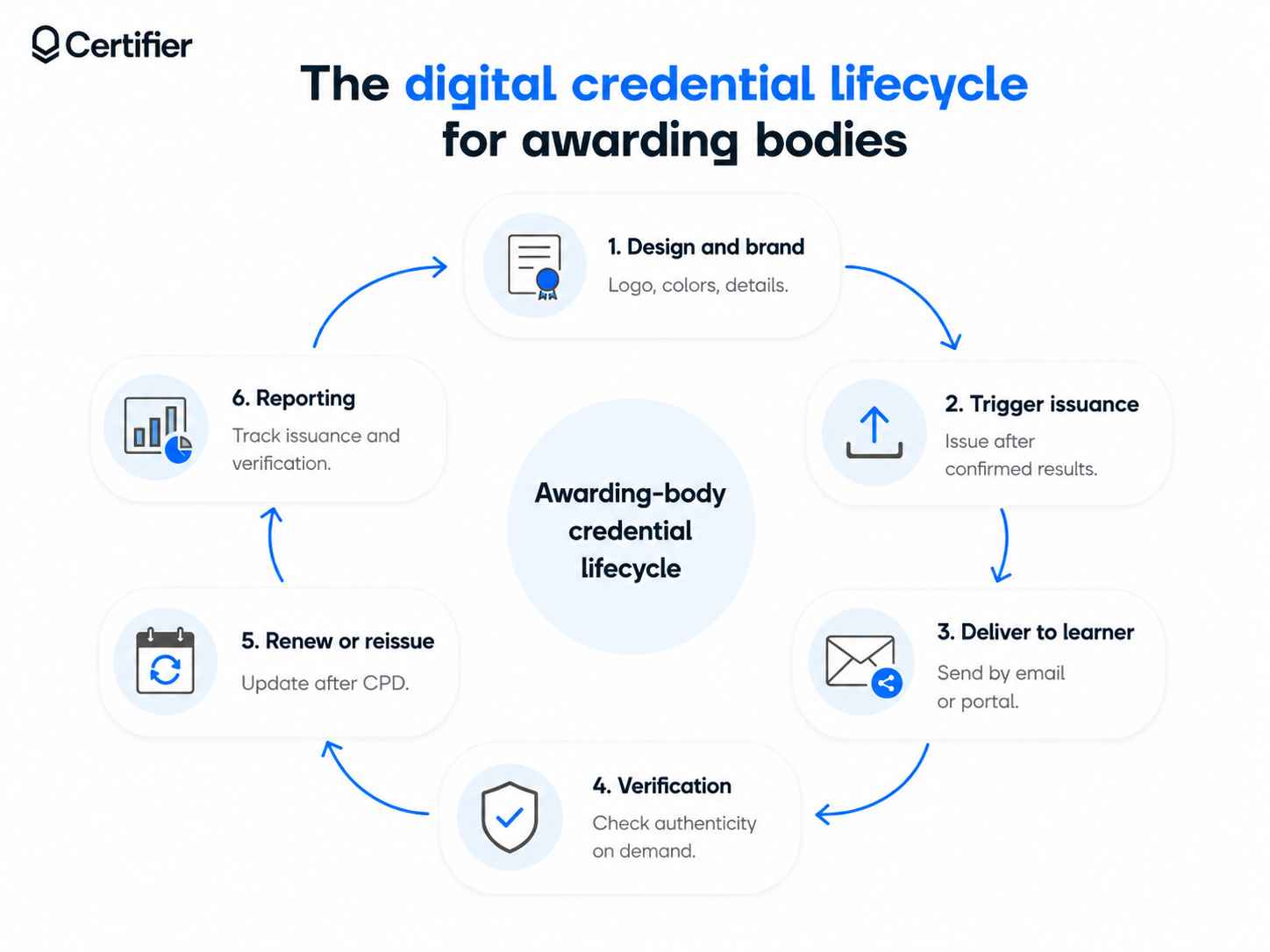
The six-stage digital credential lifecycle for awarding bodies, from design and issuance to verification, renewal, and reporting
01Design and brand the credential.The awarding body creates the certificate or badge and adds its logo, qualification details, adjusting texts and colors. They include who issued the credential, what it represents, and how it was earned.
02Trigger issuance after a confirmed result.Once an assessment result or award decision is approved, the digital credentials for awarding bodies can be issued manually, in bulk, or automatically through an API or integration with the body’s LMS or assessment platform. Automation is useful for large cohorts as it removes the need to transfer candidate data and issue each credential separately.
03Deliver the credential to the learner.The recipient receives the credential by email or through a learner portal. They can then claim it and share it on LinkedIn and other social media.
04Support verification on demand.An employer or regulator opens the issuer-controlled verification page to confirm that the credential is genuine and current.
05Renew or reissue it when required.For qualifications tied to CPD or re-certification, the awarding body can extend or reissue the credential once the learner meets the renewal requirements. Automated workflows can trigger the updated credential after the required activity is recorded.
06Report on credential activity.The awarding body tracks issuance, claims, sharing, and verification activity across groups. These records support internal quality reviews and provide evidence for audits or regulatory reporting.
Steps two and five are where automation pays off. Connecting issuance to your assessment system through API and automated workflows removes the manual step.
If you're scoping a move off paper, a short checklist turns these needs into evaluation criteria.
Score any digital credentials for awarding bodies platform against it:

Issuer-controlled verification: a public page tied to your brand, so anyone can confirm a credential.
Bulk and API issuance: batch uploads and automated triggers for cohort-scale volume.
Branding and white-label: your accreditation marks on the credential and the Issuer’s Portal.
Lifecycle controls: managing credential validity and renewals after issuance.
Security and compliance: alignment with the enterprise security requirements for digital credentials that your IT and procurement teams will assess.
Integrations and reporting: connections to your assessment systems and exportable activity data.
Treat it as a scorecard for any digital credential service provider on your shortlist. For the full procurement view, the breakdown of what makes a platform good for enterprise goes deeper than a segment checklist can.
Certifier is the platform issuers run on to create and manage credentials at scale.
For awarding bodies, the relevant pieces line up with the checklist. Credentials are verifiable, and they can carry your branding and accreditation marks.
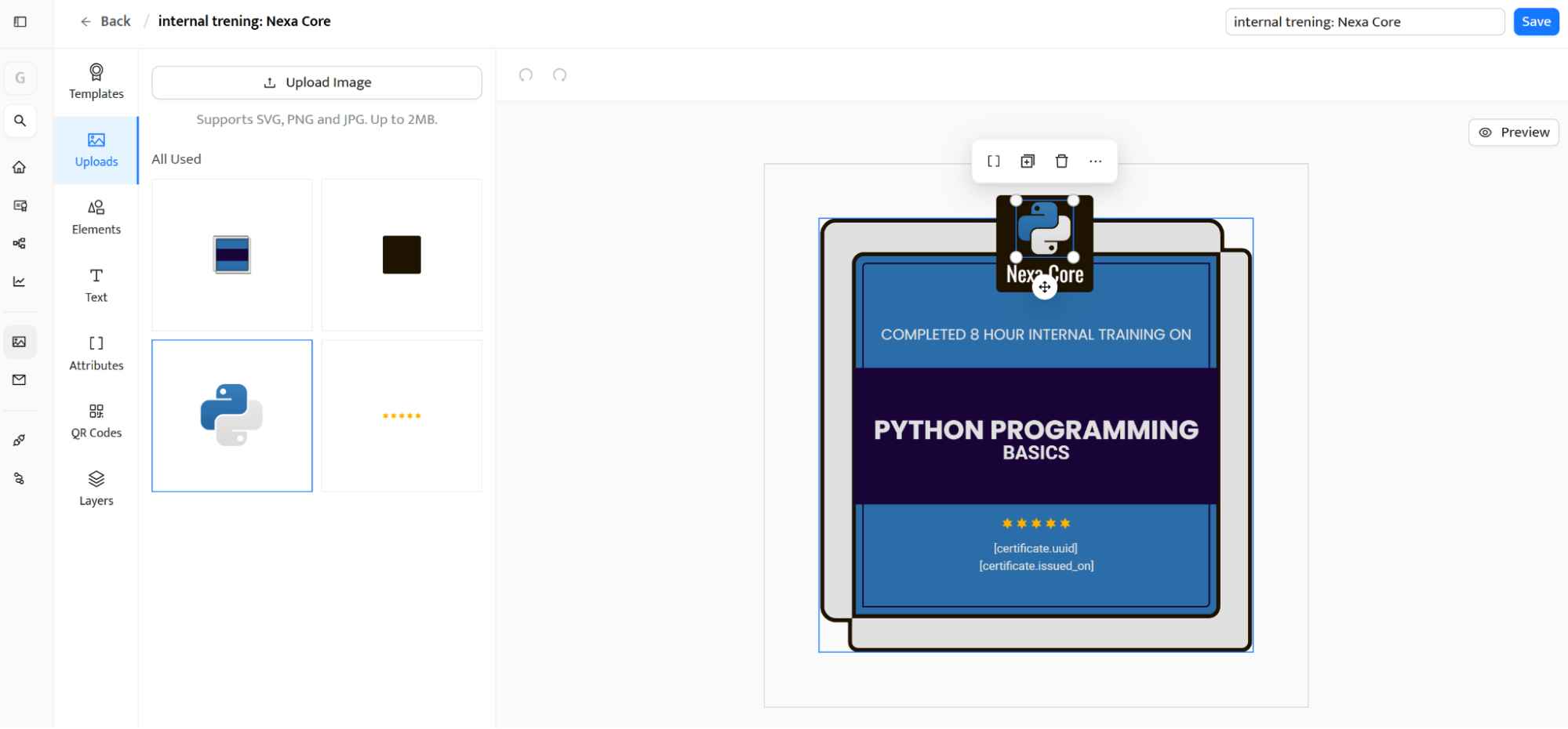
Adding logo to a digital badge in Certifier’s editor
Bulk issuance and native integrations connect issuance to your assessment or LMS results, so a cohort goes out in one run. Post-issuance, credentials management handles expiry and renewal.
Corrections can be made without issuing a new credential and security documentation is available for IT and procurement review.
To see how the verification side works for issuers, see how Certifier delivers verifiable credentials.
For awarding bodies, moving away from paper and static PDFs means adopting a complete credential lifecycle. The right platform connects confirmed assessment results to issuance, gives learners portable proof of achievement, and lets employers or regulators verify each credential on demand.
With verification, renewals, and reporting built into the process, credential management becomes easier to scale and requires less manual administration.
Explore Certifier's enterprise features for effective credential lifecycle management.

- B2B SaaS marketing
- Digital Credentials
- Content Strategy
- On-page SEO
- Lead Generation
Chief Marketing Officer
Aksen leads marketing at Certifier, bringing 7+ years of experience with global brands to position digital credentialing as a trusted solution for training providers and educational institutions.
Vocational Education and Apprenticeships – City & Guilds
https://www.cityandguilds.com/