
Trusted by:
University of Southern California
Warner Bros.
Volvo
Amazon
Stanford University
Updated: August 17, 2026
13 min read
Most digital certificates look legitimate, but being verifiable and looking legitimate are two different things. This guide explains what verifiable digital credentials are and how they work.
Research with AI:
Most organizations still issue certificates the same way: create a document, export a PDF and email it out. The problem is that a PDF they send can be edited or faked and there is no easy way to prove it is real.
Verifiable digital credentials solve that problem. They come with built-in proof of authenticity, so anyone can check whether the credential is valid in seconds.
Certifier helps organizations issue credentials that are verifiable and impossible to fake. This guide explains what verifiable digital credentials are, how they work and why more organizations are replacing PDFs with them.
TL;DR
Verifiable digital credentials let anyone check if a credential is real through a public link.
Unlike standard digital credentials, they include built-in proof of authenticity.
Certifier issues credentials that are easy to verify, share and manage at scale.
You can start issuing verifiable credentials with Certifier for free.

Verifiable digital credentials meaning, in plain terms: a digital record of an achievement that carries built-in proof of its own authenticity. It confirms who issued the record and whether it has been changed since issuance, not just what someone accomplished.
A standard certificate document tells you something about a person. A digital verifiable credential proves it, because the issuer's identity and a tamper-detection mechanism are embedded in the record itself.
Digital diplomas can be issued as verifiable digital credentials. So can professional licenses and skills badges. What they share is a structure that makes them instantly checkable and structurally difficult to forge.
If you're currently issuing PDFs, you're issuing digital credentials, but not verifiable ones. The gap between the two matters more than most issuers expect.
These two terms are often used as if they mean the same thing. They don't.
A digital credential is any record stored in a digital format. It might be genuine. It might not be. The file itself gives you no way to tell.
A verifiable digital credential adds something a plain file cannot provide: proof. It includes a digital signature from the credential issuer, structured credential metadata, such as issue date and achievement details and a verification mechanism.
That mechanism is usually a public link or QR code that confirms the credential is real and unaltered.
The table below shows the practical difference:
Criteria Digital Credential Verifiable Digital Credential Shareable ✅ ✅ Tamper-proof ❌ ✅ Instant verification ❌ ✅ Fraud-resistant ❌ ✅ Portable across platforms Partially ✅
For issuers, this gap has real consequences. Every unverifiable certificate carries a fraud risk and it's the issuing organization's reputation that suffers when a forged one surfaces.
Certifier's verifiable credentials features handle the full technical layer automatically, so your team doesn't need to manage any of it.
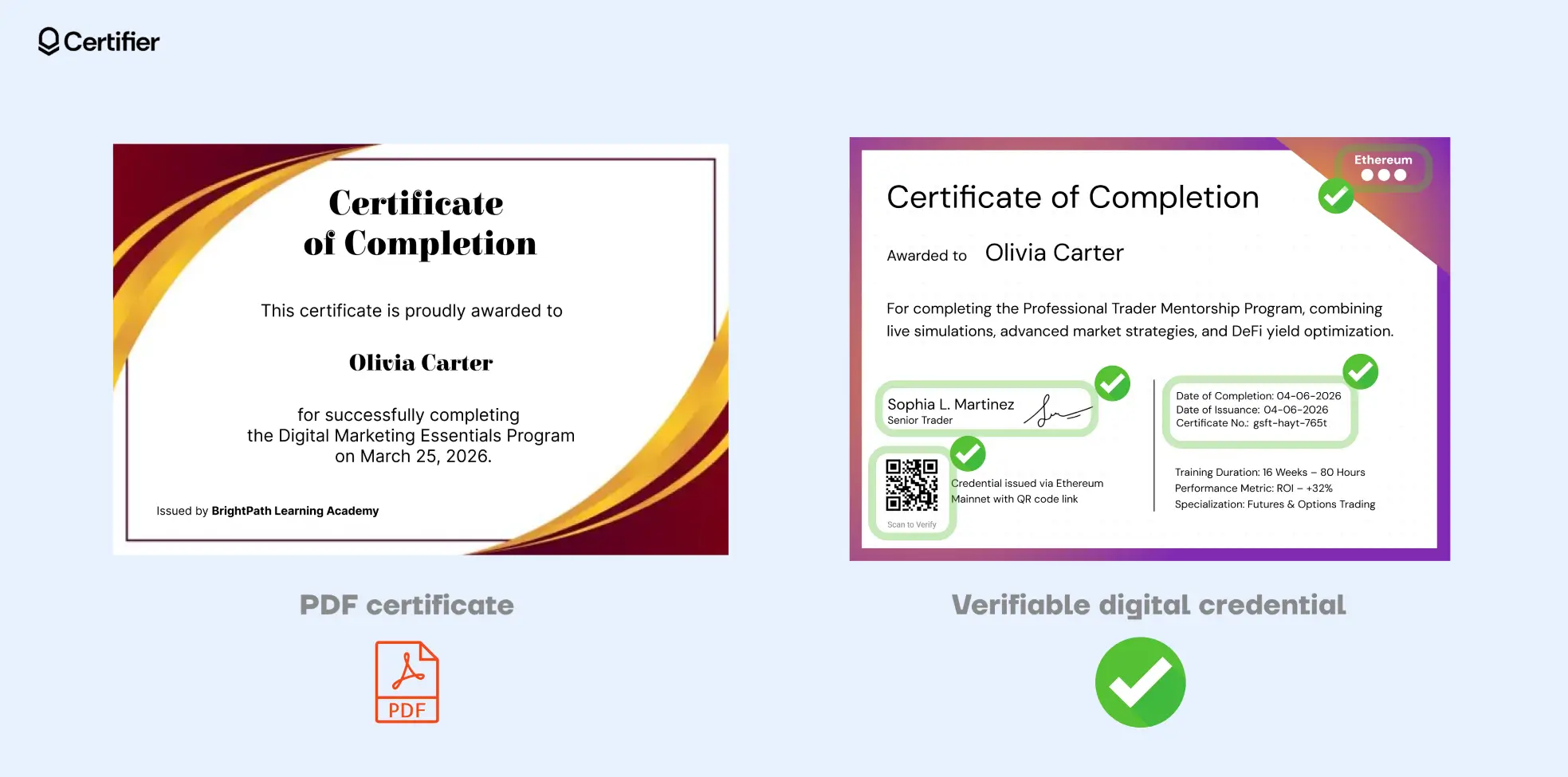
PDF certificate vs verifiable digital credential with QR verification code. UUID, logo and digital signature
Did you like the verifiable credential examples above? You can create such a certificate using this template in the Certifier credential template editor.
You can also visit our certificate template library and choose a template that suits your needs. Psst! Use filters, they are super helpful since our library is pretty huge.
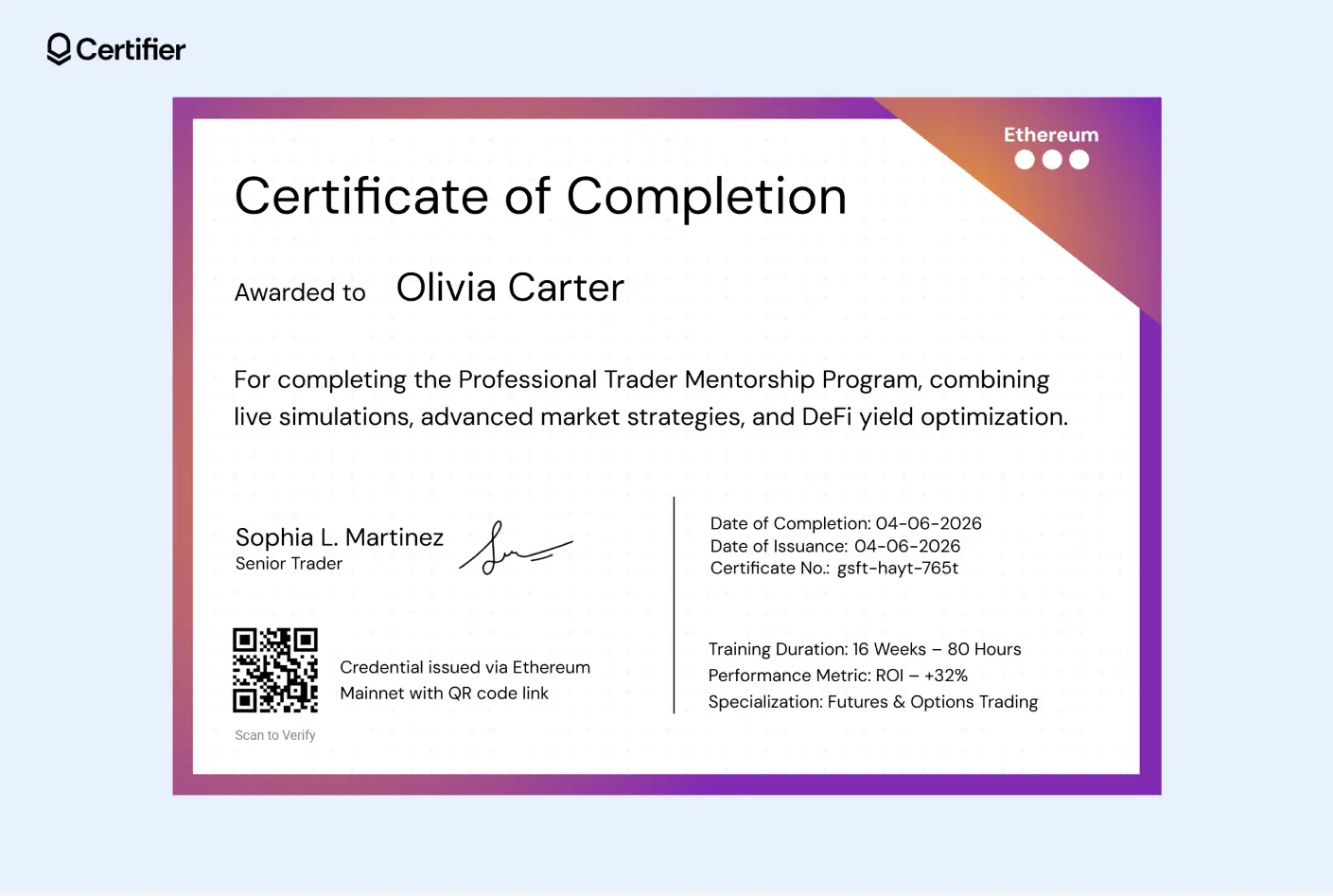
The system involves three parties, each with a specific role.
The credential issuer is the organization that creates and signs the credential—a university or a corporate L&D team, for example. The issuer's identity is embedded in the credential at the point of issue.
The recipient is the person who earns the credential. They can share it on LinkedIn or send a direct verification link to a prospective employer.
Recommended to read
The relying party is whoever needs to confirm the credential is genuine—an HR manager or a licensing board. They visit the public link and see the full credential metadata alongside proof of credentials that confirms the record is valid.
The issuer creates a credential with defined metadata. This includes the achievement name, the criteria required to earn it, the issue date and the recipient's details.
That credential is then signed using Public Key Infrastructure (PKI)—a security standard that ties the credential to the issuer's verified identity. Certifier is a digital credentials management platform that handles this automatically. The issuer doesn't manage any keys directly.
A UUID is then assigned to the credential. UUID stands for Universally Unique Identifier. It's a code that is unique to that specific credential and links it to a public verification page.
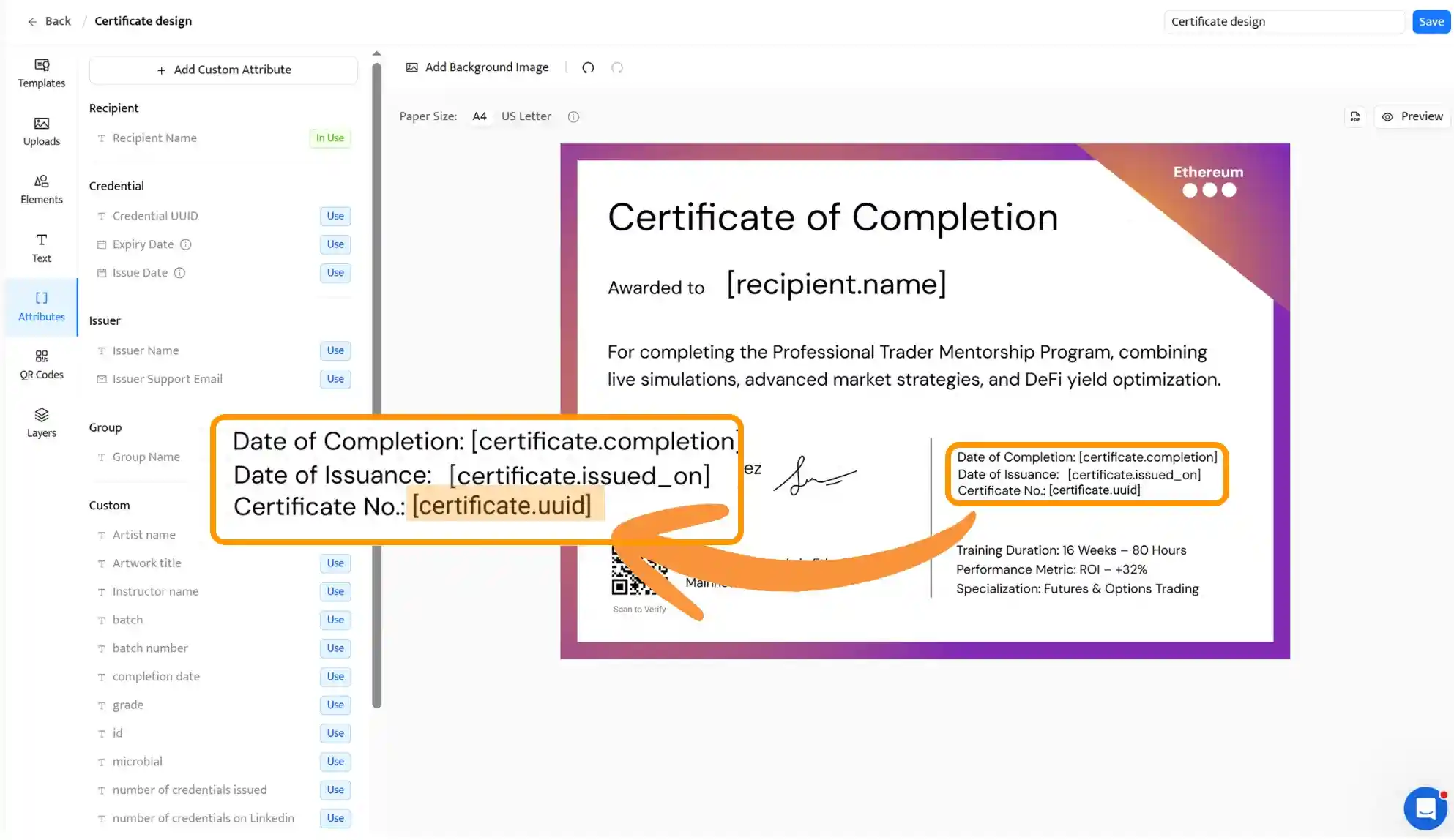
In Certifier’s template editor, you can generate a unique UUID using dynamic attributes
The recipient receives the credential and can share it freely. When a relying party clicks the link, they see the full credential metadata and a confirmed verification status.
Every verifiable digital credential relies on two mathematically linked codes: a private key and a public key.
The issuer holds the private key. It generates a unique signature tied to the exact content of the document at the moment of issue.
The public key is available to anyone. It's used to check whether that signature still matches the document's current content, making validating credentials as genuine a one-click process.
If someone edits the credential after it's been issued, changing a name or swapping out a grade, the signature no longer matches. The verification check fails immediately.
Each credential issued through Certifier is assigned a UUID that links it to a hosted public page. That page displays the full credential metadata: issuer name, achievement details, issue date and verification status.
The recipient shares the link. The relying party clicks it. Verification is instant and requires no account or login on either side.
Not every digital credential is secure or verifiable by default. To know how to issue a secure certificate or badge that can actually be verified by anyone, check the video guide created by our team:
Most organizations issuing credentials today have no fraud protection and no scalable process.
Digital verifiable credentials address both directly and they make proof of credentials something any recipient can share and any employer can confirm on the spot.
When someone forges a certificate from your organization, your name is on the document. Every credential issued through Certifier carries your data. If it's altered, verification fails immediately.
This is particularly critical in sectors where credentials carry regulatory or legal weight—healthcare and finance are the clearest examples. But the risk is relevant to any organization whose credentials are taken seriously.
Recommended to read
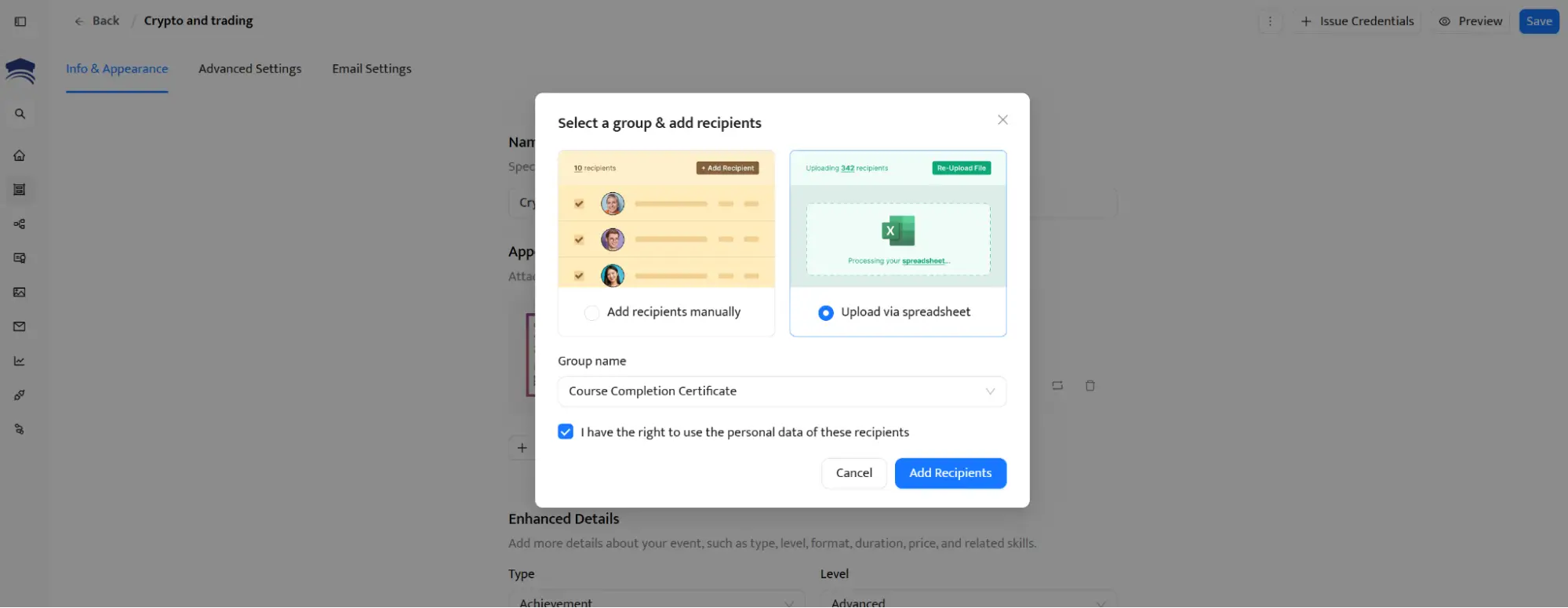
Manual credentialing is slow. A cohort of 500 learners can take hours to credential one by one. Certifier's approach to sending certificates in bulk lets you upload a spreadsheet and issue every credential in minutes, each one personalized and ready to verify.
Expiration handling is also automated. Set a validity period and Certifier flags or revoke credentials when they expire.
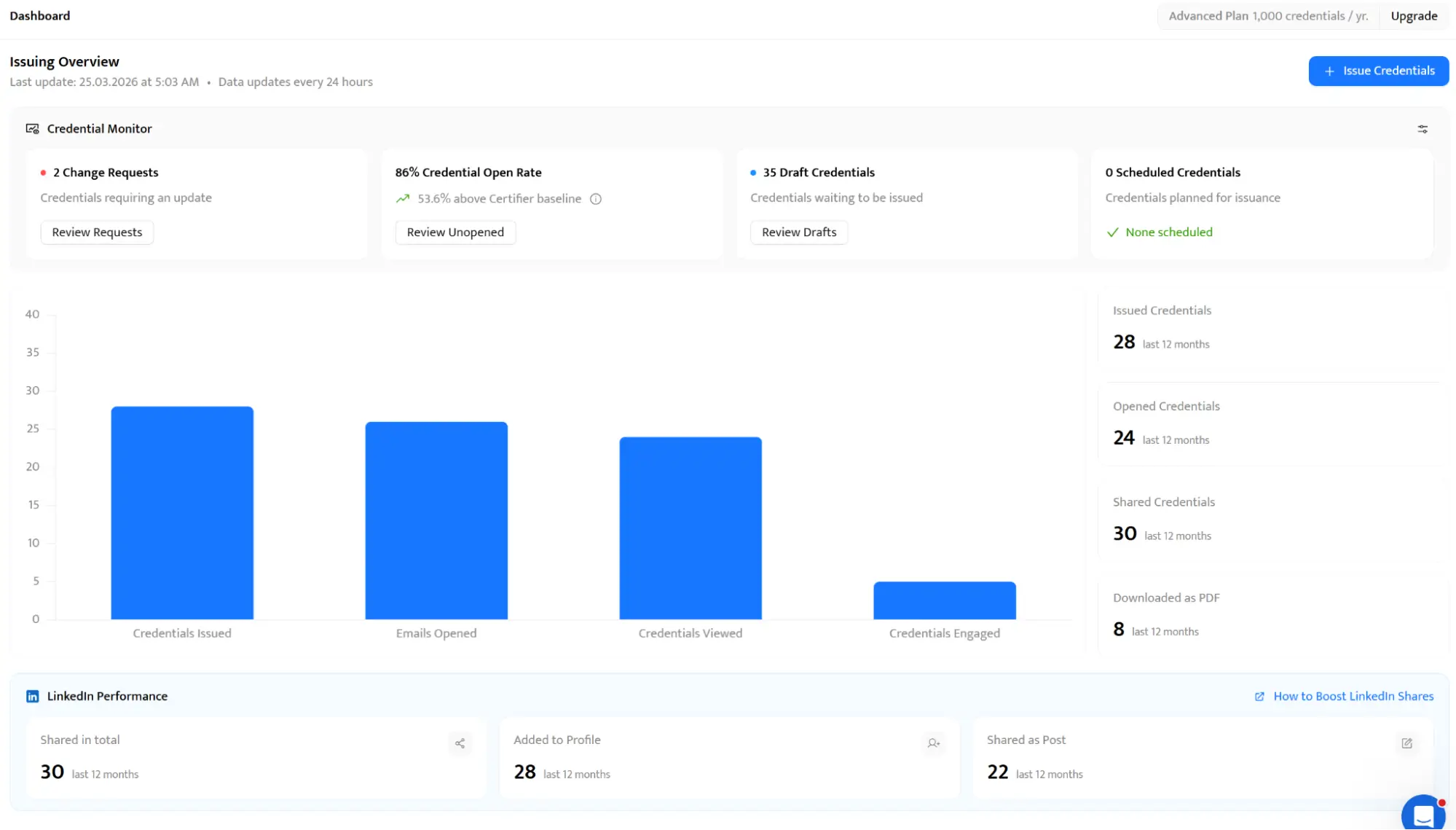
Most issuers never know what happens after a certificate is sent. Certifier's analytics dashboard shows who opened their credential, how many times it's been verified and on which platform it was shared.
That data helps justify training investment to stakeholders. It also shows which credentials recipients find valuable enough to actually share.
Digital verifiable credentials change the experience for the people earning them, not just for the organizations issuing them.
A PDF certificate is easy to misplace and gives an employer no quick way to confirm whether it's genuine.
Learn the difference between digital certificates vs PDF certificates.
A verifiable digital credential lives at a permanent public URL. It's accessible at any time by anyone with the link. It contains everything a relying party needs to confirm its authenticity, with no follow-up required from the recipient or the issuer.
Recipients can add their credential to a LinkedIn profile, embed it in a portfolio or share a direct verification link in a job application.
Credentials issued through Certifier complies with the Open Badge 3.0 standard. They carry metadata about the recipients, issuer and achievement. The badges are storable in a digital credential wallet.
This is particularly relevant for recipients who change roles or industries. Their credentials go with them, verified and intact, regardless of what happens to the issuing organization's systems.
The sections below show a verifiable credentials example from each of the main sectors where proof of credentials is already being used at scale.

Education and EdTech. A verifiable digital credentials example: a university issues a certificate with a one-click verification link. Validating credentials as genuine takes seconds. Automated delivery of digital certificates makes this scalable.
Corporate L&D and compliance. Organizations running mandatory certification programs can confirm exactly who completed what and when. Certification management software keeps the full audit trail in one place.
Professional associations and licensing bodies. In healthcare and finance, verifiable credentials let employers and regulators confirm a license in seconds—no waiting on the issuing body.
Workforce development. Verifiable credentials give learners without formal qualifications a portable, checkable record of achievement that holds up across platforms and roles.
Certifier is a verifiable digital credentials platform built for organizations that need to issue credentials at scale. The technology verifiable digital credentials rely on—digital signatures, UUID verification and Open Badge 3.0 compliance—is handled automatically, with no technical setup required from the issuer.
KYC stands for Know Your Customer. It's an identity verification process used across regulated industries to confirm that an organization is who it claims to be. Every organization issuing credentials through Certifier completes this process.
The practical benefit: anyone checking a credential can trust not just the document but the verified identity of the organization that issued it.
Every verifiable digital certificate or badge is assigned a unique UUID—a code that is specific to that credential and links it to a hosted public verification page. Full credential metadata is available instantly. No account is required to view it.
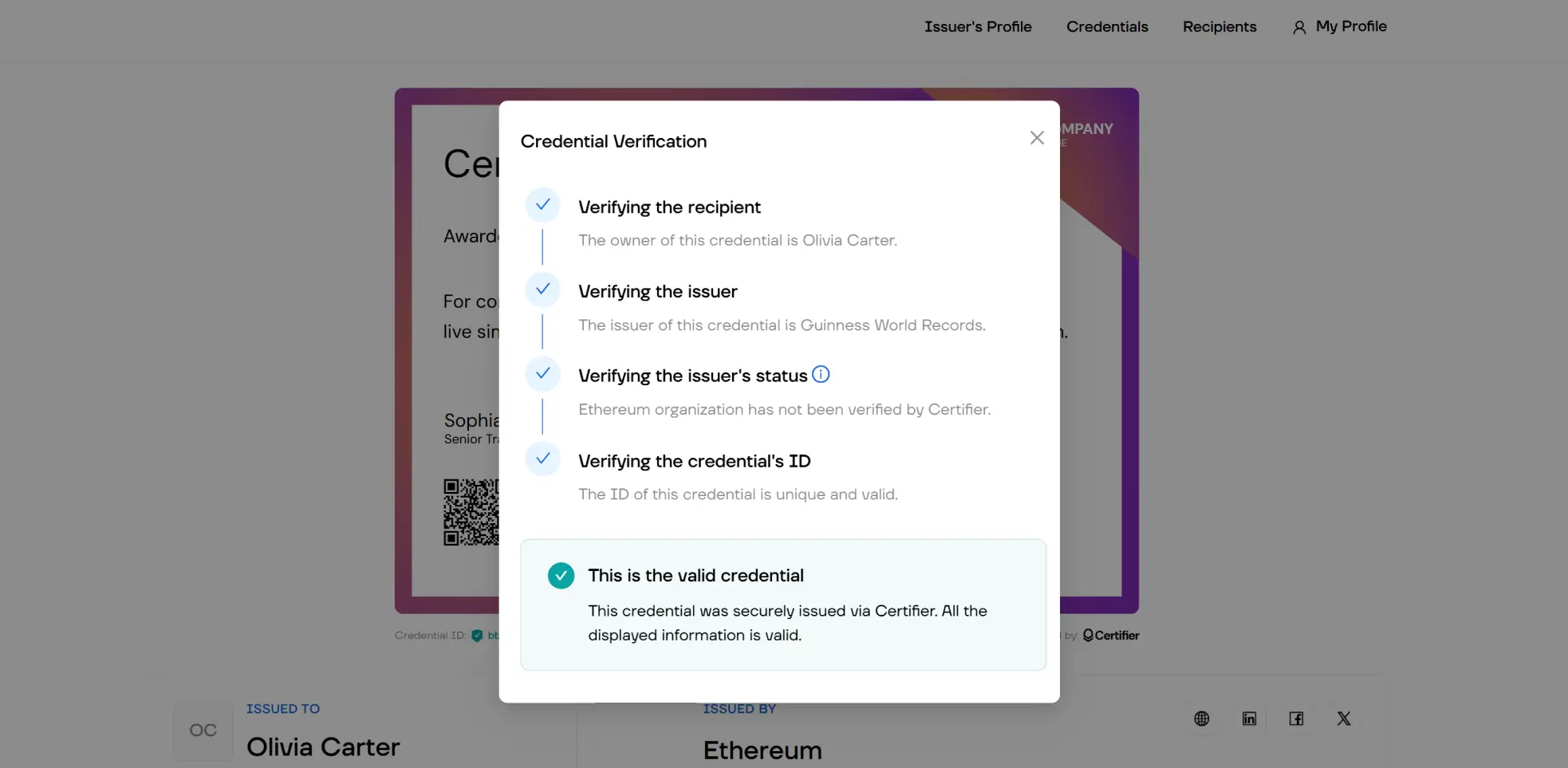
Verification process held in a digital credential wallet
Every credential issued through Certifier conforms to the Open Badge 3.0 Standard, the global specification for interoperable digital credentials.
This means embedded cryptographic proof and compatibility with any verifiable credentials wallet or HR platform that supports the specification.
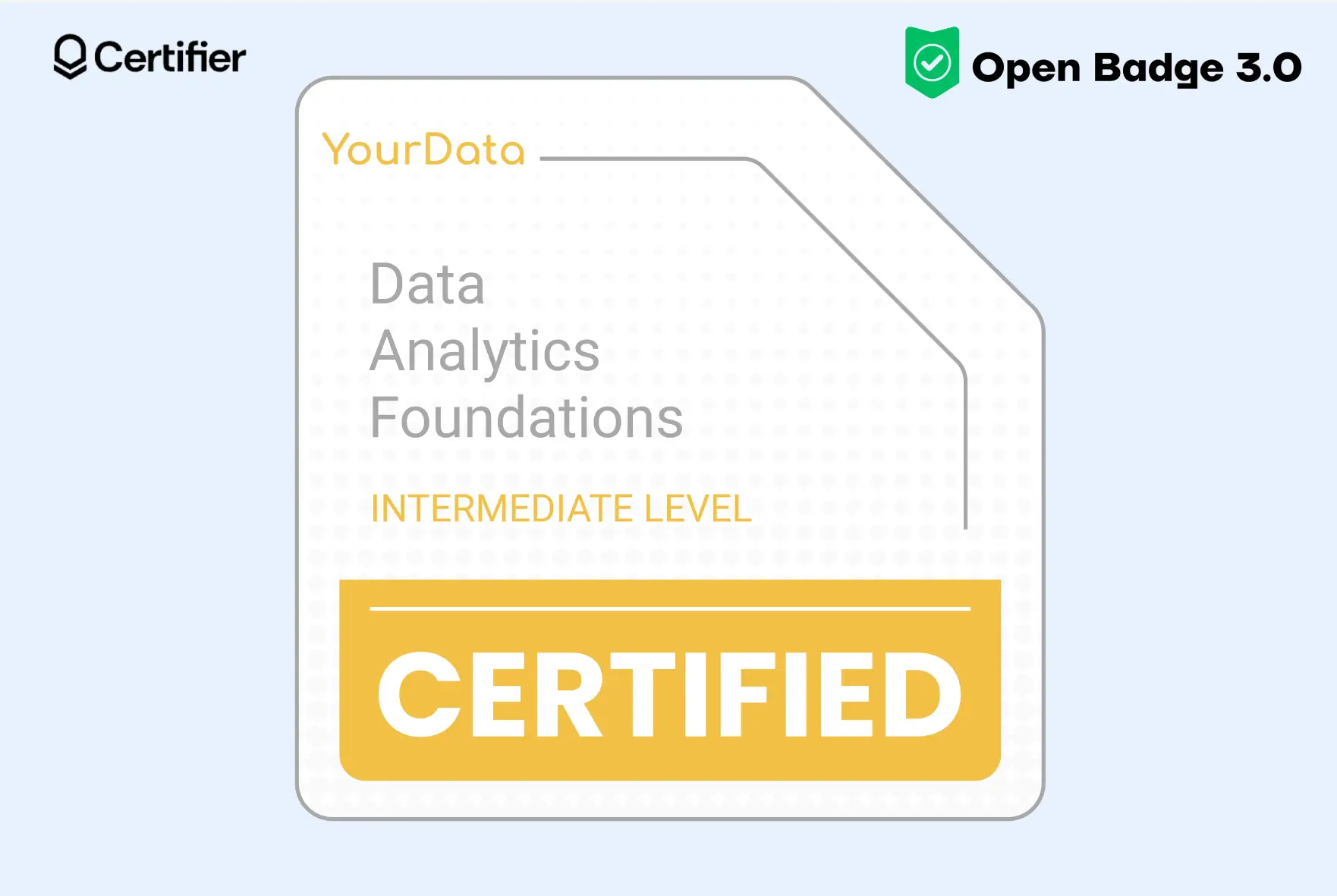
Credentials are portable and verifiable across any compliant platform, not limited to Certifier's own ecosystem.
For organizations integrating credentialing into existing systems—an LMS or an HR platform, for example—Certifier's API automates credential issuing and verification without requiring manual work in the interface.
See how to create digital certificates and connect them to your existing workflow.
All issued credentials are stored in a single searchable database. When a recipient needs a replacement or an auditor requests proof of training, the record is there—no spreadsheet hunting required.
This is one of the core advantages of using a dedicated digital credential management software platform over manual processes.
Verifiable digital credentials replace assumption with proof. Every credential carries a digital signature and a unique verification link—built in at the moment of issue.
For issuers, that means less fraud risk and less manual work. For recipients, it means credentials that prove their own authenticity and travel with them across roles and platforms.
Certifier makes this straightforward. Every credential it issues is Open Badge 3.0–compliant, UUID-verified and shareable from day one. The first 250 credentials are free.
Sign up for Certifier to start issuing verifiable credentials.
The questions below cover the most common points of confusion around verifiable digital credentials—from verifiable digital credentials meaning to how they're used in practice.

- SaaS Growth
- Digital Credentials
- APIs
- Product Marketing
- Company Operations
CEO and Co-Founder
Sergey is CEO and Co-Founder of Certifier, a Forbes 30 Under 30 honoree building digital credential infrastructure for 2,000+ organizations worldwide and shaping the future of credentialing.